League of Legends Classic Explained: 60 Champions, Old Runes, No Ranked
- What is League of Legends Classic?
- The 60-champion launch roster
- Runes and masteries are back
- The summoner spells that came back
- Classic Levels, Summoner's Journey and the Classic Pass
- What carries over from your main account
- What is missing at launch
- Will League Classic stick around?
- How to start playing today
League of Legends Classic went live on July 29, 2026 alongside Patch 26.15, and it is the biggest thing Riot has shipped to League in years. This is not a nostalgia weekend. It is a full mode sitting inside the client you already have, running the old Summoner's Rift with runes, masteries, Influence Points and an item shop that has not existed for over a decade. If you played between 2009 and 2013, this is the version of the game you remember. If you did not, it plays almost nothing like modern League.
This guide covers the launch roster, the systems Riot brought back, what transfers from your main account and what is deliberately missing.
What is League of Legends Classic?
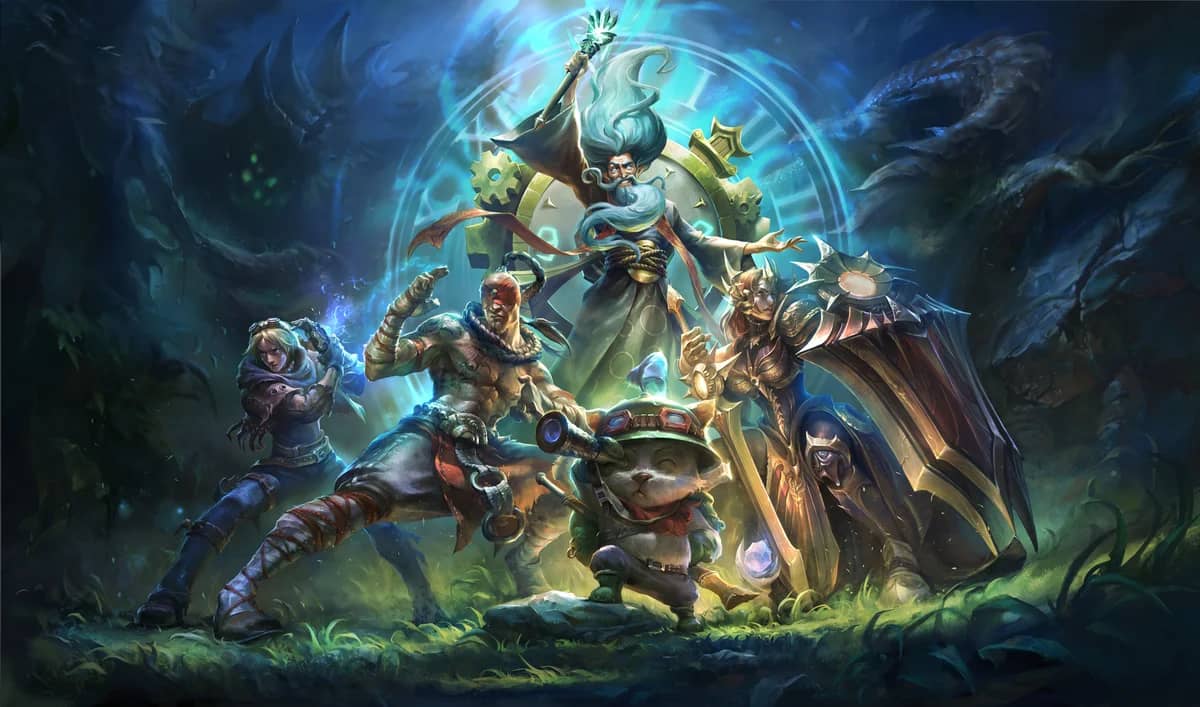
League Classic is a retro game mode that recreates League of Legends as it played between 2009 and roughly 2013. It runs the original Summoner's Rift with Season 3 and 4 visual styling, restores the pre-2018 rune and mastery systems, and uses Influence Points as its currency. It launched with 60 champions using their old kits.
The important framing, and Riot has been direct about this, is that Classic is a greatest-hits build rather than an exact restoration of any single patch. Riot pulled from across the early years instead of freezing the game at one date. That means you will find things from both earlier and later versions sitting side by side, and chasing an exact 2012 replica will only lead to disappointment. Point-and-click abilities are back, item actives matter, and the pace rewards macro decisions over raw mechanical output.
The 60-champion launch roster
Classic launched with 60 champions: the original 40 that shipped in 2009, plus roughly twenty more released through 2013. The full roster is tracked on the League of Legends Wiki. The cutoff sits just before Yasuo, which is a deliberate line in the sand. Yasuo marked a shift toward the high-mobility, mechanically dense design philosophy that defines modern League, and including him would have undercut the whole point of the mode.
























































Riot has confirmed the next wave of additions rather than releasing everything at once:








These arrive gradually across patches. The staggered release is not just pacing, it feeds into The Council, the community voting system that lets players weigh in on which champions and features get prioritised next. Voting weight scales with your Classic Level, so players who have invested more time carry more influence. The first Council ballot is scheduled for Patch 26.17 on August 26.
Runes and masteries are back
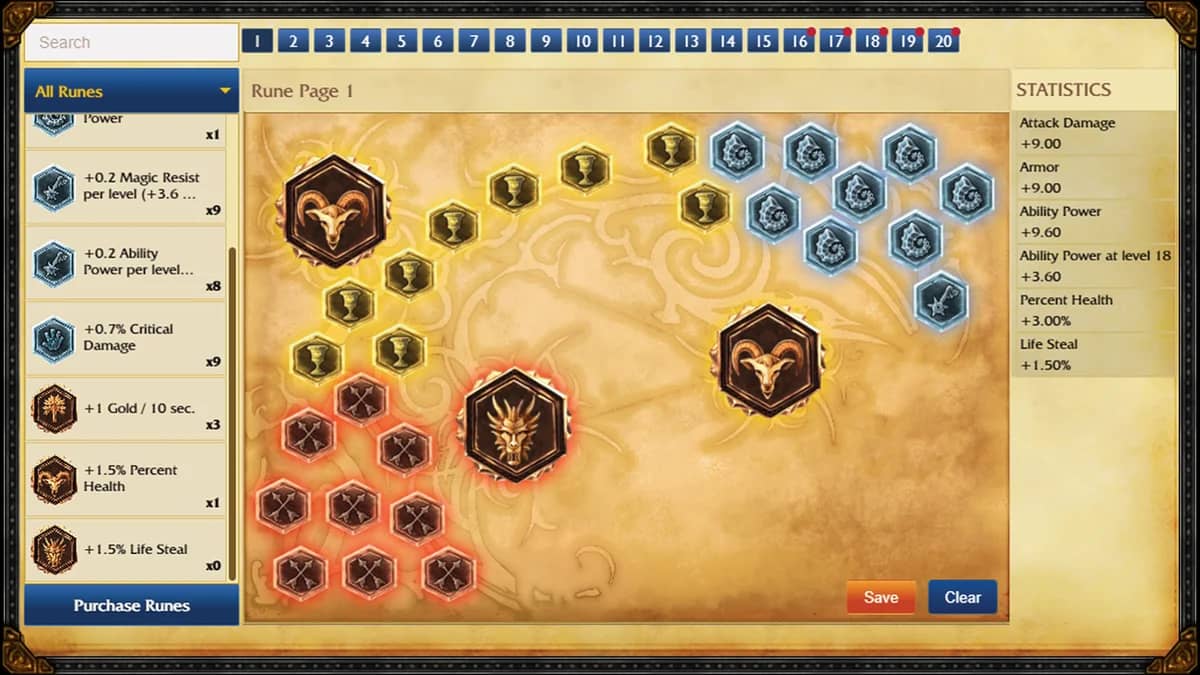
This is the system returning players will need to relearn most. Pre-2018 League had you buying runes with Influence Points and slotting them into rune pages before a match, then spending mastery points across three trees. Both are back.
Riot did make one significant concession to accessibility: every rune exists at Tier 3 potency, so there is no longer a grind through weaker tiers before you are competitive. You still pay IP, but you are never handicapped by owning the wrong tier.
| Rune type | IP cost |
|---|---|
| Marks | 500 |
| Seals and Glyphs | 500 (650 for minor variants) |
| Quintessences | 1,250 |
| Additional rune page | 1,500 |
You start with three rune pages, which is enough to cover a primary role, a secondary and an experiment. Masteries unlock early in the level track and cap at 30 points spread across three trees.
The in-game shop carries over 170 items from the Season 3 and 4 era. Heart of Gold is back, along with the gold-generation items and item actives that shaped that period's build paths. Anyone who learned League after 2014 should expect their item intuition to be actively wrong here.
The summoner spells that came back
If the runes do not convince you this is a different game, the summoner spell list will. Classic runs sixteen spells, and six of them no longer exist in modern League at all.
Ten are still part of the game you know:


These six were permanently removed over the years and only exist in Classic:


For anyone who never played with them: Clairvoyance revealed a chosen patch of the map and was a support staple before wards carried that job alone. Promote upgraded a siege minion into a much tougher unit. Rally dropped a beacon that buffed nearby allies, Fortify protected your turrets, Surge boosted ability power and attack speed, and Revive simply put you back at the fountain immediately.
Clarity, Smite and Teleport are restricted to certain maps or roles in modern League but were never removed, which is why they sit in the first group.
Classic Levels, Summoner's Journey and the Classic Pass
Classic runs three parallel progression systems, and it is worth keeping them straight.
Classic Levels is the free track, running from 0 to 30. It gates and unlocks the mode's systems as you climb: runes, masteries, Influence Points, Blue Essence and cosmetics. Hitting level 30 completes the track and awards the RUSTIER Blitzcrank skin, which is Classic-exclusive.
Summoner's Journey is the competitive ladder, unlocking at Classic Level 10. The tiers are Salt, Wood, Silver, Gold, Platinum, Diamond and Legend. Salt and Wood are jokes aimed squarely at anyone who remembers "wood division" as community shorthand for being unrankably bad, and it is a good signal of the tone Riot is going for.
Classic Pass is the optional paid cosmetic track, structured in seasonal acts. Act II runs through Patch 26.20. Nothing on it affects gameplay.
What carries over from your main account
This is the part most players get wrong, and it matters if you are planning how to spend your time.
Main account vs Classic
| Carries into Classic | Stays on your main only | |
|---|---|---|
| Champion ownership | Yes, if the champion is in the 60 | |
| Account level | Yes | |
| Ranked tier and MMR | Yes | |
| Blue Essence balance | Yes | |
| Legacy pre-2018 runes | Yes, these were converted in 2018 and do not return | |
| Skins and cosmetics | Yes, Classic has its own |
Champion ownership is the single bridge between the two. Any champion you already own that appears in the Classic roster unlocks automatically, and that is genuinely valuable, because unlocking the full roster from scratch with Influence Points is a long grind. An account with deep coverage of the 2009 to 2013 champion pool starts Classic in a much stronger position than a fresh one.
Everything else resets. Your Diamond rank, your Blue Essence pile and your mastery points do nothing here. Equally, nothing you do in Classic touches your main account's rank or MMR, so it is a genuinely consequence-free place to experiment.
What is missing at launch
Classic shipped deliberately lean. There is no ranked queue and no ARAM inside Classic itself. The queues are Normal Draft, Co-op vs AI and custom games, and that is the complete list.
The single-queue design has a knock-on effect worth understanding: at launch, every player was funnelled into the same draft queue with no matchmaking history to rate anyone by. Early lobbies were lopsided as a result. That is normal for any launch rather than a flaw in the mode, and match quality tightens as the system accumulates data.
There is one ARAM-shaped exception, and it is easy to confuse with Classic. ARAM: Mayhem Classic-ish launched on the same patch as a separate, explicitly limited-time queue. It borrows the Classic map and Classic items, but the champions use their modern kits and it adds themed augments, so it is a crossover novelty rather than part of the Classic experience. Do not judge Classic by it.
Competitive structure is arriving from outside Riot too. Go4LoL, the long-running open tournament series, returned in August built around Classic, which gives the mode a grassroots competitive scene faster than most new modes get one.
Will League Classic stick around?
Worth being precise here, because a lot of coverage has overstated it. Riot has not formally committed to Classic as a permanent mode. What Riot has done is build it like something meant to last: staggered champion releases, seasonal Classic Pass acts scheduled through Patch 26.20, and The Council handing long-term roadmap input to the playerbase.
The honest read is that Classic is being launched, watched and iterated on, and its future depends on whether players stay. That is not a reason to skip it, but it is a reason not to treat a full Influence Points grind as a guaranteed long-term investment just yet.
How to start playing today
- Open the League client and update to Patch 26.15 or later.
- Select League Classic from the game mode picker.
- Check which of the 60 champions you already own, since those unlock automatically.
- Spend your starting Influence Points on runes for one role rather than spreading thin.
- Play Co-op vs AI first if you never played pre-2018 League, to learn the item shop without pressure.
- Reach Classic Level 10 to unlock Summoner's Journey.
The learning curve is real if modern League is all you know. Wave management and map control decide games far more than mechanical outplays, and the item shop rewards players who read it properly.
If you are looking to jump in with a champion pool already covering the Classic roster, browsing League of Legends accounts is the fastest route, since ownership is the one thing that carries across. You can also compare listings across the wider game accounts category to see what coverage of the 2009 to 2013 roster typically looks like.
Frequently Asked Questions
- Yes. League Classic is free and lives inside the League of Legends client you already have, so there is no separate download or purchase. The only paid element is the optional Classic Pass, a cosmetic reward track. Champions, runes, masteries and every gameplay system are earned in-game with Influence Points.
- You log in with the same account, but progression is separate. Classic gives you a fresh Classic Level track from 0 to 30, its own Influence Points balance and its own Summoner's Journey standing. Champion ownership is the one thing that transfers: any champion you already own that appears in the 60-champion roster is unlocked automatically.
- Sixty at launch, built from the original 40 champions released in 2009 plus twenty more that arrived through roughly 2013. The roster stops just before Yasuo. Riot has confirmed Akali, Caitlyn, Fiora, Graves, Irelia, LeBlanc, Mordekaiser and Urgot as future additions, released gradually rather than all at once.
- Not in the traditional sense. There is no ranked queue at launch. Instead Classic uses Summoner's Journey, a progression ladder that unlocks at Classic Level 10 and runs through Salt, Wood, Silver, Gold, Platinum, Diamond and Legend. Normal Draft, Co-op vs AI and custom games are the queues inside Classic itself, with no ARAM among them.
 League of Legends